7 min
Vokey Wedge Fitting at TPI - How Loft, Bounce, and Grind Actually Get Dialed In
7 min
Wedges are some of the most important clubs in the bag, and sometimes the most misunderstood. Most golfers pick a loft and move on. The bounce, sole grind, and how those interact with a specific attack angle and turf condition? That part rarely gets discussed, let alone properly fitted.
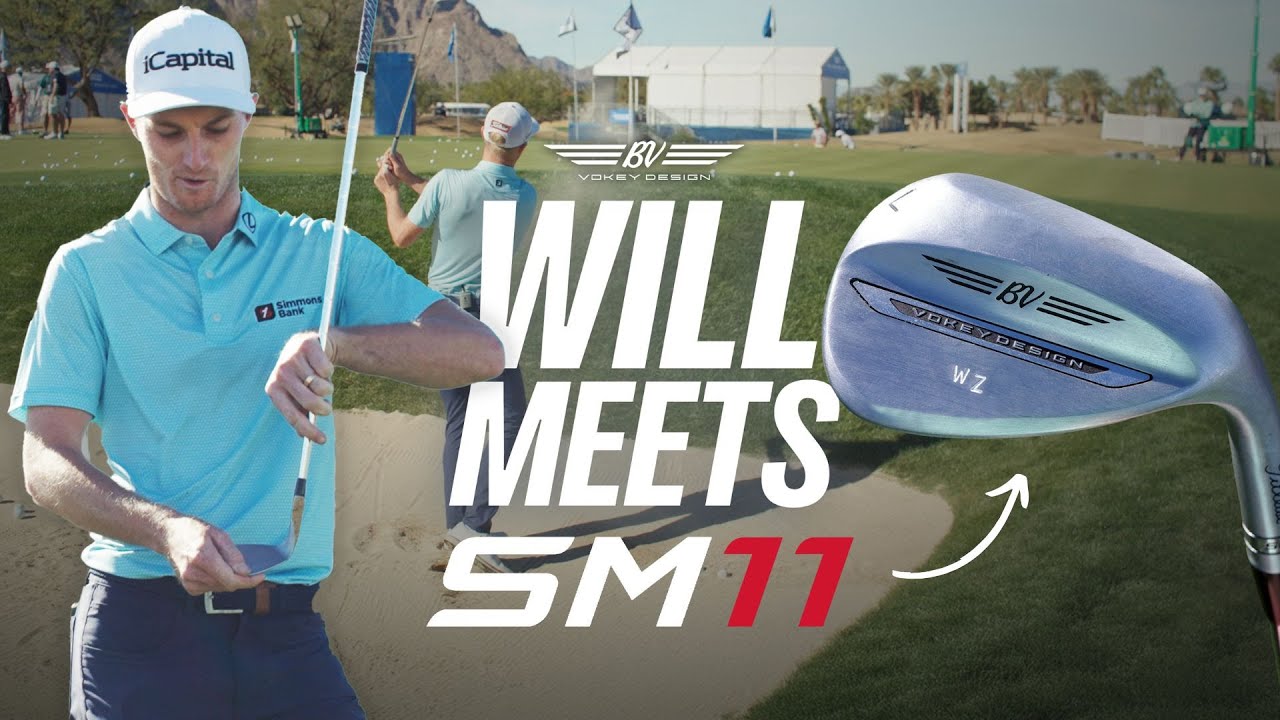
In this session, Luke Kerr-Dineen from Golf Digest visits the Titleist Performance Institute in California to work with Vokey PGA Tour rep Aaron Dill - the same person who fits Titleist's tour professionals - to run through the complete SM11 wedge fitting process from the ground up. The philosophy driving everything is contact first, flight second, spin third. When the strike is in the right zone on the face, launch and spin numbers fall into place naturally. When they don't, the instinct to swing harder only makes things worse - higher on the face, lower spin, shorter carry, less control.
The SM11 line alone offers 27 different loft, bounce, and grind combinations. In a 54 or 56 degree sand wedge, there are four distinct options - each built for different conditions, different attack angles, different players. Some grinds favor forward bounce for players who strike aggressively into the turf. Others open up versatility on the trailing edge for players who need to move the face around and hit more variety of shots. Getting this wrong doesn't just cost distance - it costs proximity. Wedges aren't distance clubs. They're proximity tools. The goal is a consistent carry number that leaves a short putt, not a long one.
The fitting covers the full bag of short game clubs - pitching wedge gapping and trajectory control, sand wedge versatility across longer pitch shots and soft turf, greenside lob shots where launch window and spin rate need to work together, and bunker play where sole width becomes the difference between confidence and doubt. Each grind change is tracked on launch monitor data - launch angle, spin RPM, carry distance - so the difference between a fitted wedge and an unfitted one isn't a feeling. It's a number.
Find a Titleist Fitting Near You: https://www.titleist.com/fitting/golf-club-fitting
In this session, Luke Kerr-Dineen from Golf Digest visits the Titleist Performance Institute in California to work with Vokey PGA Tour rep Aaron Dill - the same person who fits Titleist's tour professionals - to run through the complete SM11 wedge fitting process from the ground up. The philosophy driving everything is contact first, flight second, spin third. When the strike is in the right zone on the face, launch and spin numbers fall into place naturally. When they don't, the instinct to swing harder only makes things worse - higher on the face, lower spin, shorter carry, less control.
The SM11 line alone offers 27 different loft, bounce, and grind combinations. In a 54 or 56 degree sand wedge, there are four distinct options - each built for different conditions, different attack angles, different players. Some grinds favor forward bounce for players who strike aggressively into the turf. Others open up versatility on the trailing edge for players who need to move the face around and hit more variety of shots. Getting this wrong doesn't just cost distance - it costs proximity. Wedges aren't distance clubs. They're proximity tools. The goal is a consistent carry number that leaves a short putt, not a long one.
The fitting covers the full bag of short game clubs - pitching wedge gapping and trajectory control, sand wedge versatility across longer pitch shots and soft turf, greenside lob shots where launch window and spin rate need to work together, and bunker play where sole width becomes the difference between confidence and doubt. Each grind change is tracked on launch monitor data - launch angle, spin RPM, carry distance - so the difference between a fitted wedge and an unfitted one isn't a feeling. It's a number.
Find a Titleist Fitting Near You: https://www.titleist.com/fitting/golf-club-fitting